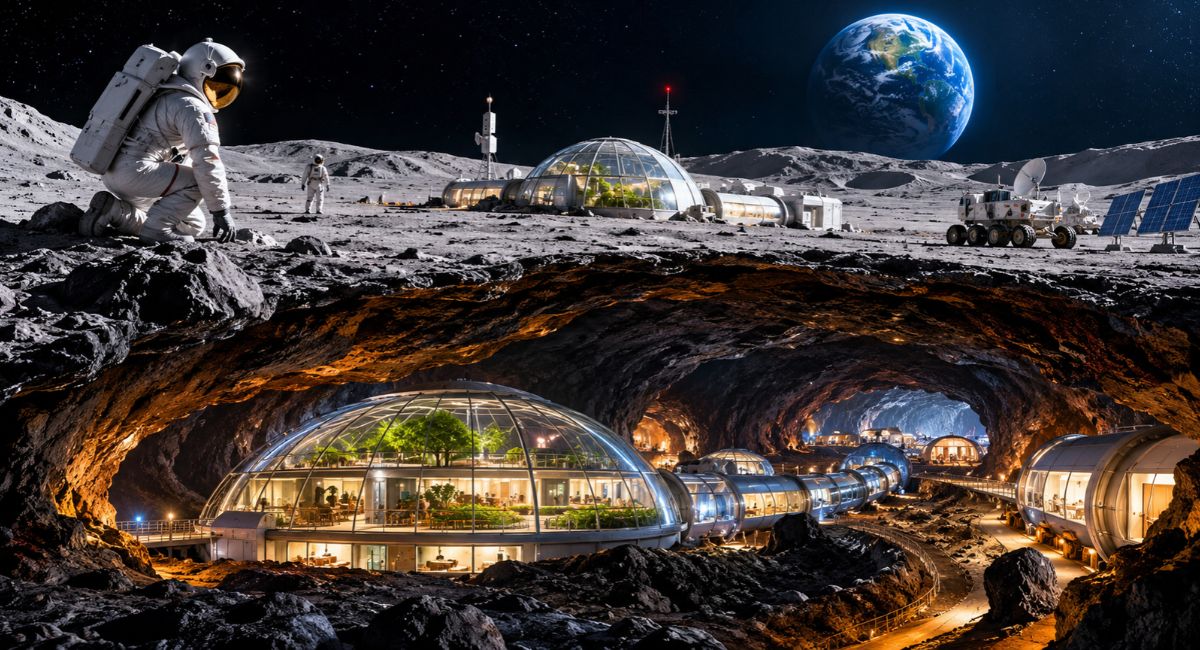
When we look up at the Moon, we see a quiet, silver orb shining in the night sky. But beneath that peaceful exterior lies a harsh, unforgiving environment. The lunar surface faces scorching daytime temperatures, freezing nights, dangerous cosmic radiation, and constant bombardment by micrometeorites. For decades, space agencies and scientists have wrestled with a massive question: How can humans safely live on the Moon for long periods without spending a fortune hauling heavy shielding materials from Earth?
The answer might be hiding right beneath our feet. Enter the Marius Hills Blueprint, a visionary concept focusing on natural underground volcanic caves known as lava tubes. By using these subterranean chambers, future astronauts could turn raw lunar geology into an ideal haven.
| Table of Contents Understanding the Lunar Surface Challenge What Are Lunar Lava Tubes? Why the Marius Hills Blueprint Matters for Habitats Overcoming Engineering Hurdles on the Moon Conclusion |
Understanding the Lunar Surface Challenge
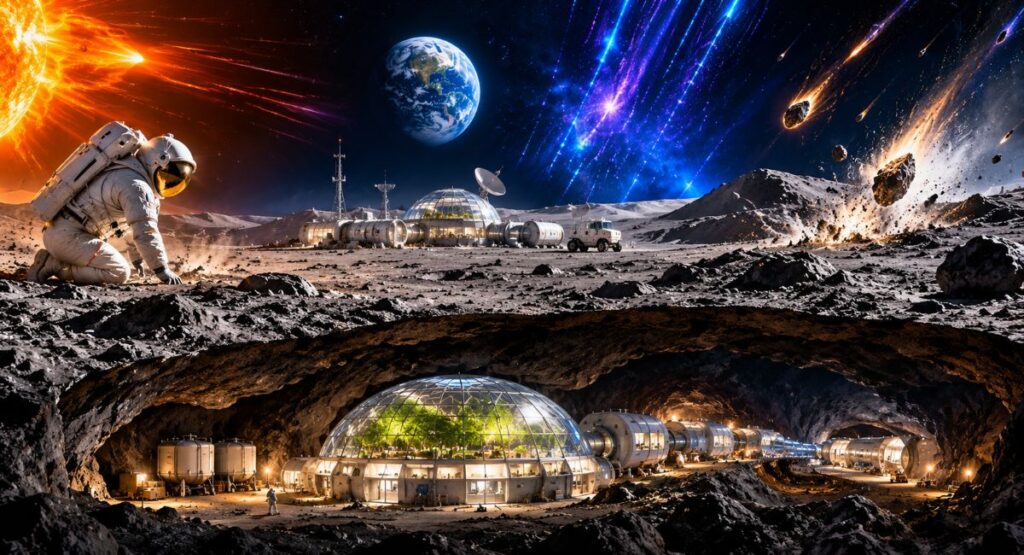
Before looking at underground solutions, it helps to understand why living directly on the Moon’s surface is so difficult. Unlike Earth, our natural satellite lacks a thick atmosphere and a global magnetic field. This absence creates several major hazards for human explorers:
Extreme Temperature Swings
Surface temperatures fluctuate wildly, swinging from a boiling 120 degrees Celsius during the lunar day down to a freezing minus 130 degrees Celsius at night.
Cosmic Radiation and Solar Flares
Without a magnetic field, galactic cosmic rays and sudden solar particle events shower the lunar landscape with dangerous levels of radiation.
Micrometeoroids
Space debris and tiny dust-sized meteoroids zip through space at incredible speeds, striking the unprotected lunar surface continuously because there is no atmosphere to burn them up.
Building surface habitats requires thick, heavy lead or regolith-based walls to protect astronauts. Transporting all those construction materials from Earth is wildly expensive and logistically daunting. That is why scientists are shifting their gaze downward.
What Are Lunar Lava Tubes?
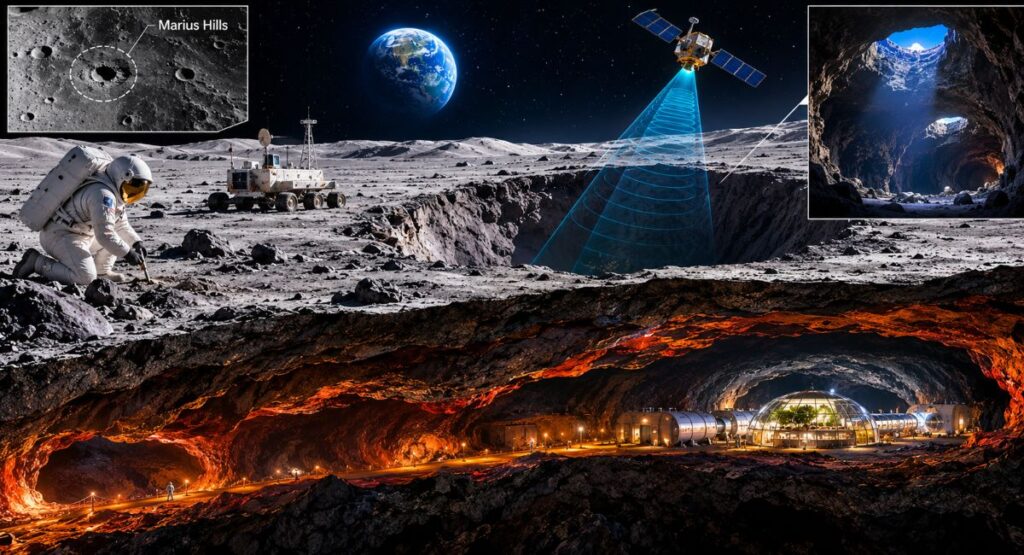
Billions of years ago, the Moon was volcanically active. Rivers of molten basaltic lava flowed across its plains, carving out channels and underground pathways. As the outer edges of these lava rivers cooled and hardened into solid rock, the molten lava inside continued to drain away, leaving behind massive, hollow tunnels known as lava tubes.
Over time, portions of the ceilings of these tubes collapsed, creating deep vertical holes called skylights or pits. One of the most promising locations for these structures is the Marius Hills region.
The Marius Hills Pit acts as a potential window into a vast subterranean world. Recent advanced space missions and radar projects such as NASA’s GIMLI (Geophysical Instruments for Marius Lunar Pit Investigation) initiative are actively probing these depths to map how large these underground voids really are.
Why the Marius Hills Blueprint Matters for Habitats
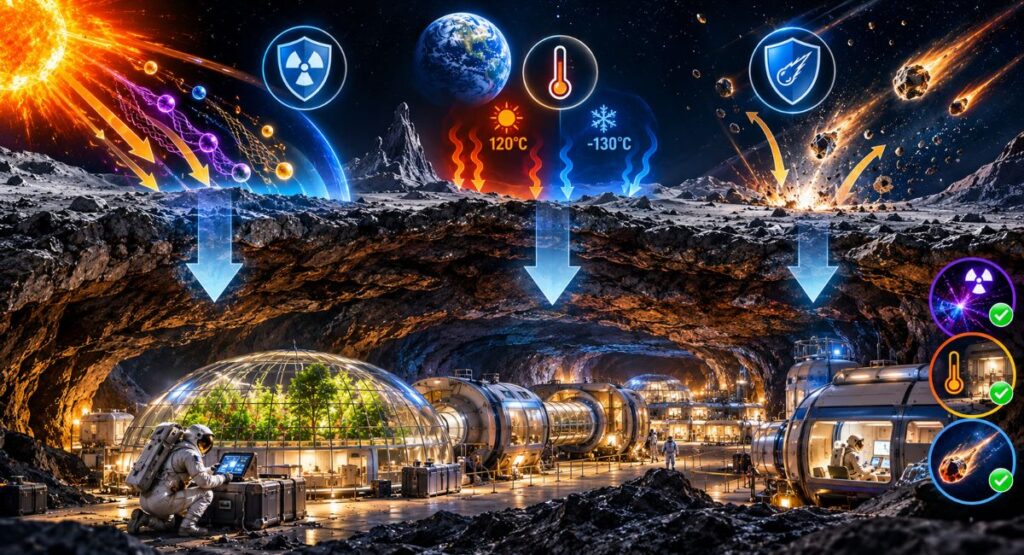
Using lava tubes like the ones in the Marius Hills changes the entire game plan for lunar colonization. Instead of building a fragile habitat on top of the dust, space agencies plan to tuck habitats safely inside these natural caves.
1. Natural Radiation Shielding
Living several meters or tens of meters beneath solid rock offers instant protection against galactic cosmic rays and solar flares. The rock layer acts as a natural shield, drastically reducing the radiation dose a human body receives.
2. Thermal Stability
Unlike the surface, which bakes and freezes in turns, the interior of a deep lava tube maintains a remarkably steady, mild temperature year-round. This thermal consistency reduces the strain on life-support systems and heating/cooling units.
3. Micrometeoroid Safety
Underground habitats are completely safe from the constant rain of high-speed micrometeoroids. Astronauts can sleep and work without worrying about a sudden puncture in their living quarters.
Overcoming Engineering Hurdles on the Moon
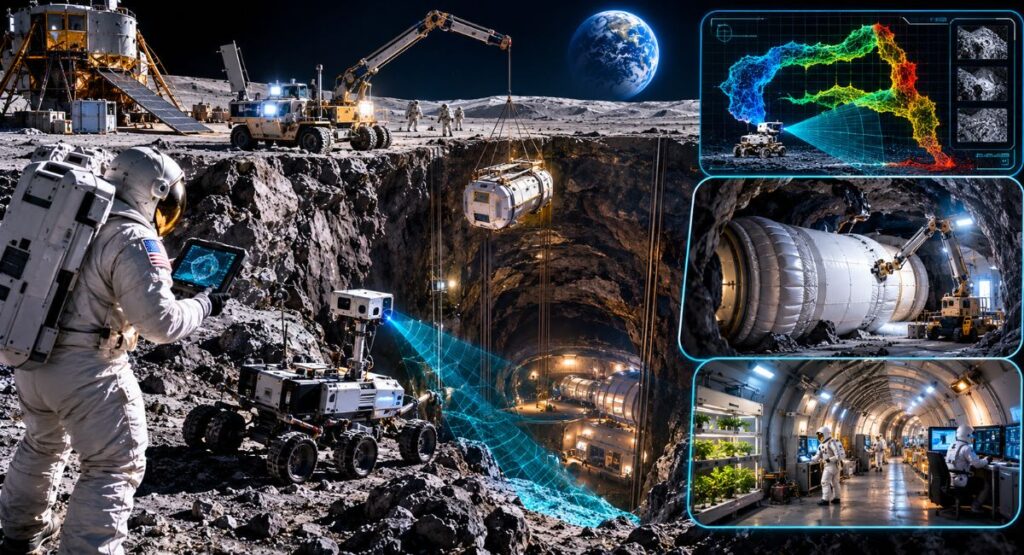
While the idea sounds like science fiction, turning the Marius Hills blueprint into reality requires solving serious engineering puzzles. Moving humans underground is no small feat.
Accessing the Pit
Getting equipment and astronauts down a 40-to-50-meter-deep vertical cliff requires specialized elevators, cranes, or climbing robots.
Mapping the Interior
Before sending people inside, autonomous rovers and radar systems must thoroughly map the tubes to check for structural stability and hidden fractures.
Sealing and Pressurization
If a lava tube has cracks or openings, engineers will need to design lightweight, expandable inflatable habitats that fit snugly inside the cave, sealing in breathable air and atmospheric pressure.
Despite these challenges, robotic technology is advancing rapidly, paving the way for safe subterranean exploration.
Conclusion
The journey to becoming a spacefaring civilization relies on our ability to live off the land or, in this case, live in the land. The Marius Hills blueprint represents a brilliant shift in space architecture, moving away from vulnerable surface modules toward the secure, natural embrace of lunar lava tubes. As radar technology and seismic sensors inch closer to unlocking these ancient underground chambers, humanity takes one giant leap closer to making permanent moon bases a reality.