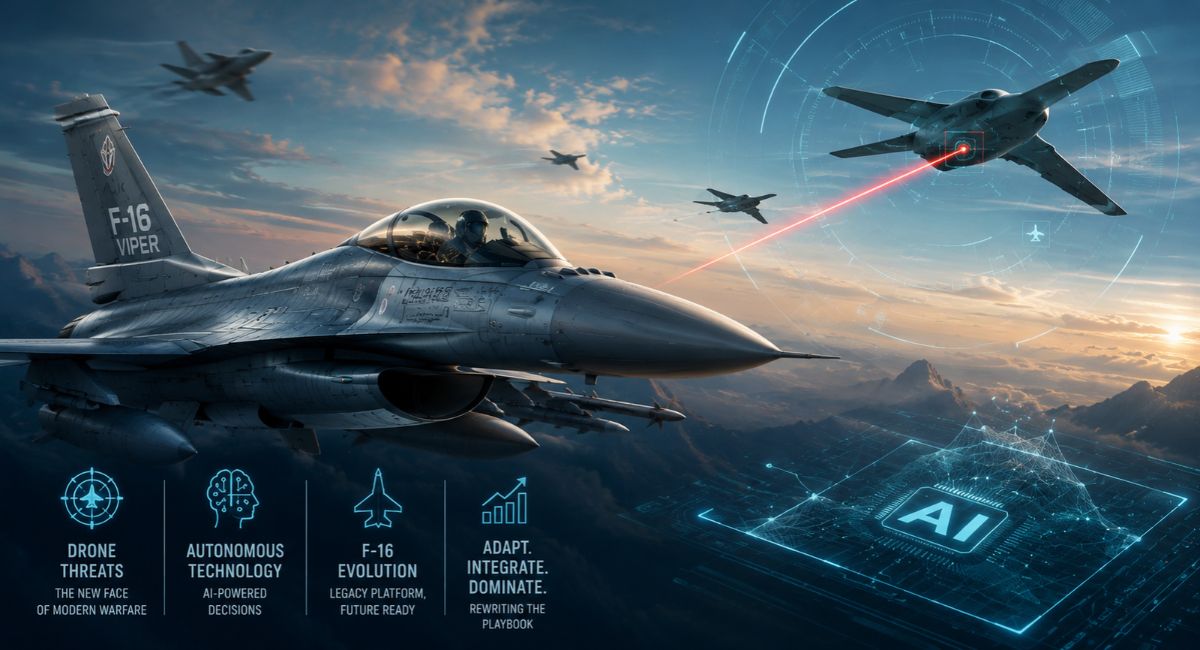
When you picture a military fighter jet speeding through the sky at supersonic speeds, you probably imagine a highly skilled pilot in a flight suit, pulling heavy G-forces, making split-second decisions, and controlling the aircraft with a joystick. For over four decades, that image was the gold standard of military aviation.
The F-16 Fighting Falcon (often affectionately called the Viper) has long stood as one of the most agile, versatile, and successful multi-role fighter jets in human history. But today, a quiet revolution is happening high above the clouds.
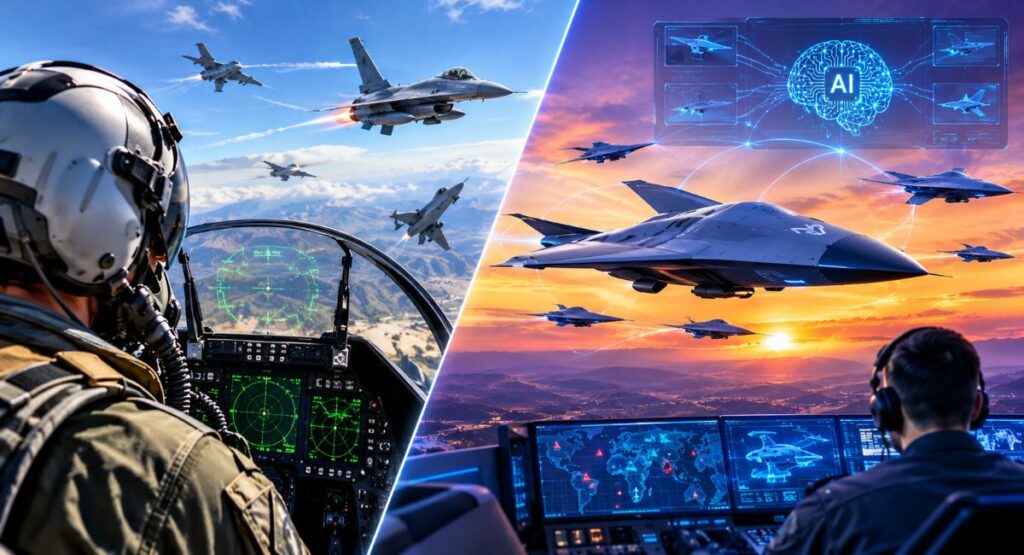
The sky is no longer occupied solely by human pilots engaged in visual dogfights. Instead, modern airspaces are filled with autonomous stealth drones, artificial intelligence (AI) flight control algorithms, and complex unmanned aerial systems.
How did a jet designed in the 1970s become the ultimate proving ground for 21st-century autonomous warfare? The answer lies in the intersection of historic drone interception missions, advanced fly-by-wire controls, and groundbreaking AI experiments.
This article explains how yesterday’s lessons in drone interception and today’s autonomous flight tech are rewriting the modern fighter jet playbook for beginners.
The Legacy of the F-16: Built for Evolution
To understand where aviation technology is going, it helps to understand where the F-16 came from. When engineers designed the F-16 during the Cold War, they wanted a lightweight, highly maneuverable dogfighter. It was revolutionary for its time because it introduced fly-by-wire flight controls.
Instead of traditional mechanical cables and hydraulic lines directly moving the wing flaps, an F-16 relies on onboard computers to process the pilot’s joystick inputs. The flight computer then sends electronic signals to adjust the controls, keeping the inherently unstable jet balanced in mid-air.
This electronic control architecture turned out to be a massive advantage. Because the jet was already designed to accept digital computer commands, retrofitting an F-16 with artificial intelligence algorithms decades later did not require rebuilding the mechanical skeleton of the airplane.
Lessons from Drone Interceptions: The Shift in Air Threats
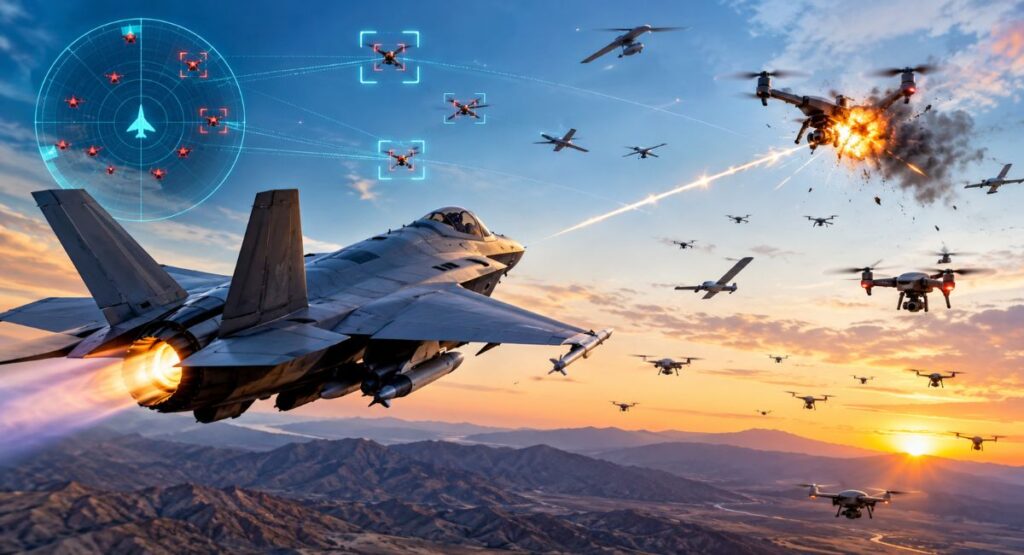
Why are air forces around the world so focused on drone interception and autonomous tech? The simple answer: the nature of aerial combat has radically shifted.
1. Asymmetrical Air Threats
In recent military conflicts across the globe, low-cost unmanned aerial vehicles (UAVs), suicide drones, and reconnaissance quadcopters have flooded the skies. Taking down a $10,000 kamikaze drone with a multimillion-dollar missile fired from a high-maintenance, crewed jet is financially unsustainable over long periods.
2. The Speed and Volume Problem
Modern drone swarms can launch simultaneously from multiple directions, overwhelming standard ground radar systems and human pilot reaction times. Combat aircraft must track, evaluate, and counter several incoming aerial hazards in fractions of a second a rapid pace that exceeds natural human cognitive limits.
Yesterday’s high-stakes drone interceptions taught military strategists crucial lessons:
- Relying purely on human sight and reaction speed is no longer enough.
- Fighter platforms now operate as connected data hubs designed to swiftly spot, prioritize, and eliminate incoming swarm threats.
- Aircraft need cost-effective, automated solutions to counter incoming low-cost drone threats.
Autonomous Tech Takes Off: VENOM and the X-62 VISTA
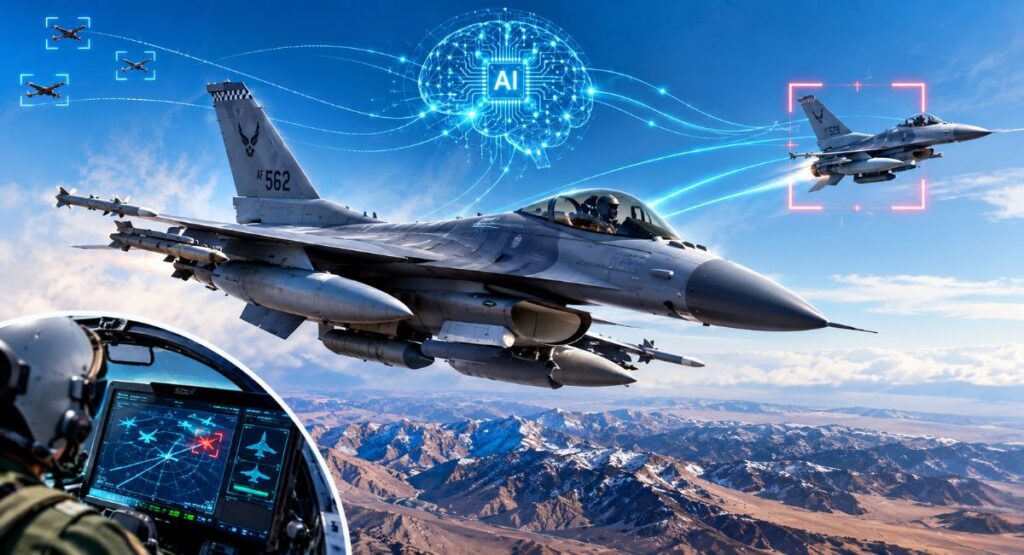
If you thought autonomous F-16s were purely sci-fi concepts, the real-world flight test programs will surprise you.
Military researchers and engineers have transformed working F-16s into fully autonomous airborne laboratories. Two flagship projects highlight this incredible shift: X-62A VISTA and Project VENOM.
The X-62A VISTA Experience
The X-62A VISTA (Variable In-flight Simulation Test Aircraft) is a modified F-16 platform equipped with software that lets it mimic the flight characteristics of almost any other aircraft or fly entirely under AI control.
In historic real-world test flights, the autonomous X-62A went head-to-head in visual dogfights against human-piloted fighter aircraft. The onboard AI agent made tactical maneuvers, adjusted airspeed, and autonomously tracked target aircraft, while human safety pilots sat in the cockpit, ready to take over if necessary.
Project VENOM: Rapid AI Deployment
Building upon those tests, the U.S. Air Force introduced VENOM (Viper Experimentation and Next-gen Operations Model). This program retrofits standard F-16 aircraft with autonomous software packages.
Instead of waiting 10 to 15 years to design a new pilotless fighter jet from scratch, engineers use existing, combat-proven F-16s as live-sky test platforms. AI flight agents learn, adapt, and refine tactical algorithms in actual weather conditions and real airspace.
How Autonomous Technology Rewrites the Fighter Jet Playbook
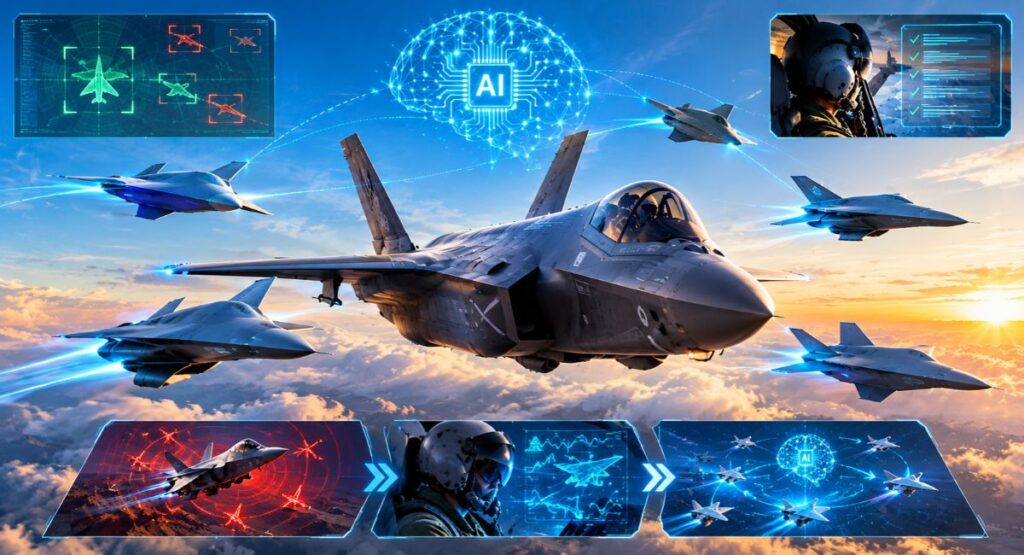
Integrating autonomous algorithms into proven airframes like the F-16 completely changes how air combat strategy works. Here are the key strategic playbooks being rewritten today:
1. Human-Machine Teaming (The Loyal Wingman Concept)
The future of fighter aviation isn’t necessarily about entirely replacing human pilots; it’s about giving them digital teammates.
In a Collaborative Combat Aircraft (CCA) setup, a single crewed jet (like an F-35 or an upgraded F-16) acts as a battle commander, while several autonomous, uncrewed jets fly alongside. The autonomous aircraft can fly ahead to scout dangerous anti-aircraft missile zones, jam enemy radars, or intercept incoming drone swarms while keeping the human pilot out of harm’s way.
2. Eliminating Human Physical Limitations
Human pilots are remarkable, but they face clear biological constraints. High-G maneuvers (sharp, high-speed turns) force blood away from the pilot’s brain, risking temporary blackouts. Human operators also suffer from physical fatigue during long missions.
An AI-piloted fighter jet has no physical limitations:
- It can pull extreme maneuvers without risking pilot blackout.
- It maintains instant reaction times even after hours of continuous flight operations.
- It operates without hesitation or physiological stress during high-risk missions.
3. Accelerated Strategic Learning
When a human pilot learns a tactical maneuver, that skill belongs to that individual pilot. Training thousands of pilots takes decades.
With autonomous AI agents, learning is exponential. If an AI agent flying an F-16 discovers an optimized evasion maneuver during an air interception exercise, that data can be updated across an entire fleet of autonomous aircraft overnight.
Real-World Applications Beyond the F-16
The insights gained from flying autonomous F-16s are spilling over into every branch of modern defense aviation.
- Autonomous Target Interception
Advanced sensor networks allow AI systems to identify, track, and intercept unidentified aerial vehicles automatically, presenting recommended engagement strategies to air defense commanders.
- Sixth-Generation Aircraft Design
Next-generation stealth fighter jets are being built from the ground up with native autonomous software integration, directly influenced by data gathered from F-16 test flights.
- Emergency Flight Recovery
The automated safety packages tested on F-16s can take control of an aircraft if a human pilot becomes incapacitated due to medical emergencies or spatial disorientation, flying the jet safely back to base.
Traditional vs. Autonomous Combat Aviation
| Feature | Traditional Air Combat | Autonomous Aviation Playbook |
| Primary Operator | Human pilot inside cockpit | AI algorithms supervised by human commanders |
| G-Force Limit | Restricted by human anatomy (9G max) | Restricted only by structural airframe limits |
| Reaction Time | Split-second human perception | Millisecond algorithmic processing |
| Fleet Adaptation | Years of pilot training academies | Rapid software updates across platforms |
| Tactical Role | Solo or flight-pair human missions | Crewed-Uncrewed Teaming (Loyal Wingman) |
Ethical and Strategic Challenges
While autonomous tech brings unbelievable combat efficiency and safety for pilots, it also introduces serious questions that military planners must carefully manage:
- The Human-in-the-Loop Requirement
Military doctrines emphasize that critical decisions regarding lethal force must always involve human oversight. Balancing rapid AI automation with necessary human control remains a central challenge.
- Cybersecurity and Jamming Risks
Autonomous aircraft rely heavily on code and sensor networks. Protecting these networks from enemy electronic warfare and hacking attempts is crucial.
- Trusting the Software
Pilots and commanders must build absolute trust that autonomous agents will predictably follow rules of engagement in chaos-filled combat zones.
Conclusion
The F-16 Fighting Falcon began as an agile, fly-by-wire dogfighter. Today, through groundbreaking programs like VISTA and VENOM, it has reinvented itself as the ultimate bridge into the autonomous age of aviation.
Yesterday’s hard-learned lessons in drone interception proved that air defense demands faster reaction times, smarter data processing, and scalable cost structures. By pairing classic supersonic airframes with modern artificial intelligence, global aviation is entering a new era where humans and autonomous machines fly wing-to-wing to protect the skies.