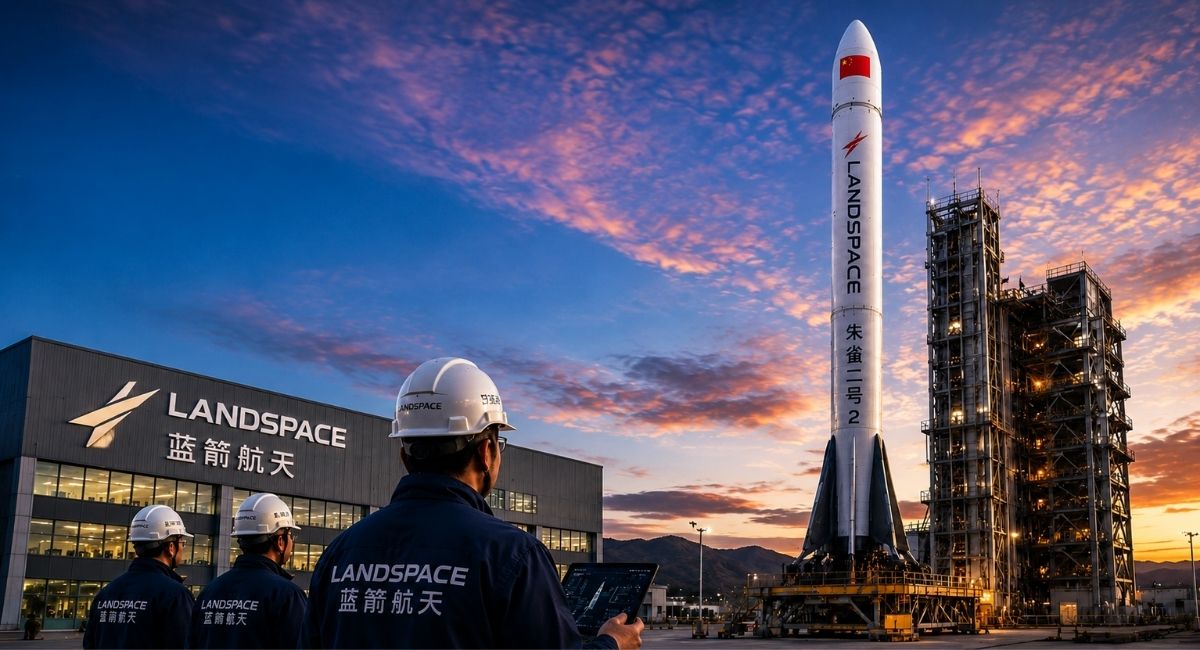
The United States and China are at odds in the battle to find water ice on the Moon. A bigger competition than this war has begun. In this competition, private space companies from both countries are at the forefront.
For years, Chinese private space ventures have been racing to rival SpaceX’s flagship reusable rocket, the Falcon 9. Driven by Beijing’s ambitions and its status as a global manufacturing powerhouse, China is leveraging rapid technological iteration to narrow the gap with the United States—the world’s leading space superpower.
China is called the global factory of technology. Chinese companies cannot afford to let any other company outpace them in industrial development, which is why they have launched robotics missions and pursued the development of reusable satellites.
This article sheds light on Beijing’s commercial space policies and the competition between private companies of the two countries.
What are Reusable Rockets?
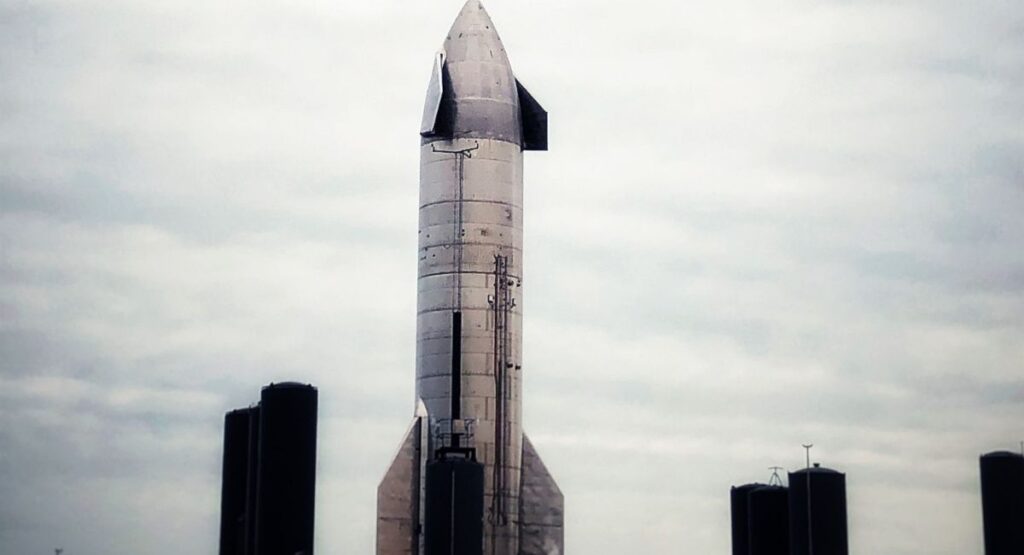
Reusable rockets are spacecraft that can be launched for another mission after a single mission. This has significantly reduced the cost of launching. This allows about 4 to 5 rockets to be launched per month.
Before the 20th century, launching reusable rockets was a huge challenge. Due to the high cost of launching, space tourism was also only for the rich.
China Private Space Startups vs SpaceX
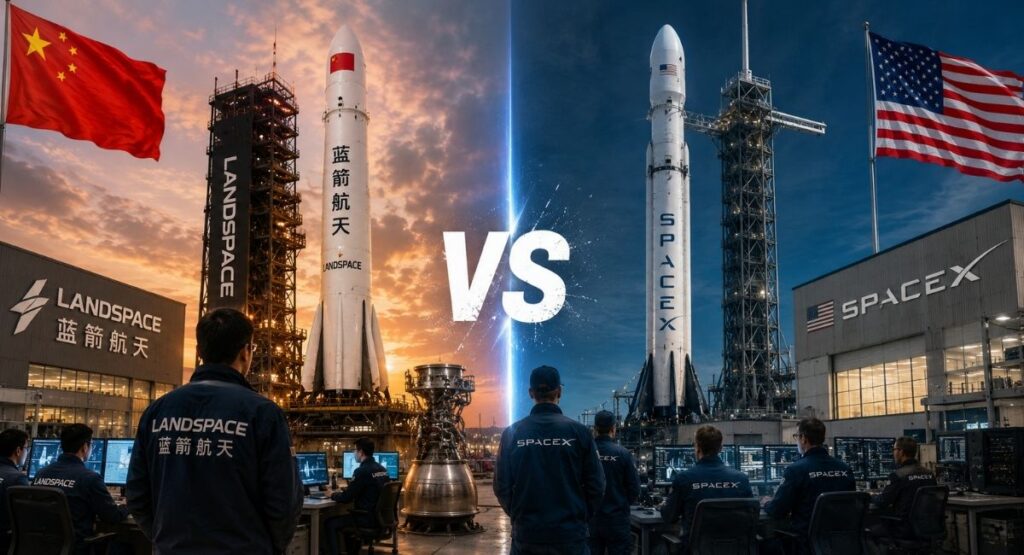
Chinese startups are using rapid manufacturing methods, low-cost, and modern technology to compete with SpaceX. The main goal of Chinese companies is to close this gap and challenge the Western world by becoming a more advanced industry in reusable rockets. Find out how both companies compare below.
| Features | SpaceX(US) | China Private Space Startups |
| Primary Launches | Falcon 9, Falcon Heavy, Starship | Zhuque-3, Tianlong-3, Pallas-1 |
| Constellations Supported | Starlink (10,000+ Active Satellites) | Guowang, Qianfan, G60 |
| Flight Experience | Hundreds of successful booster recoveries | Active VTVL landing tests and early booster recoveries |
| Fuel Choice | RP-1 / Methane (Starship) | Liquid Methane (Methalox) and Kerosene |
| Manufacturing Model | Highly vertically integrated gigafactories | Distributed manufacturing supported by China’s robust industrial supply china |
Falcon 9 vs Zhuque 3
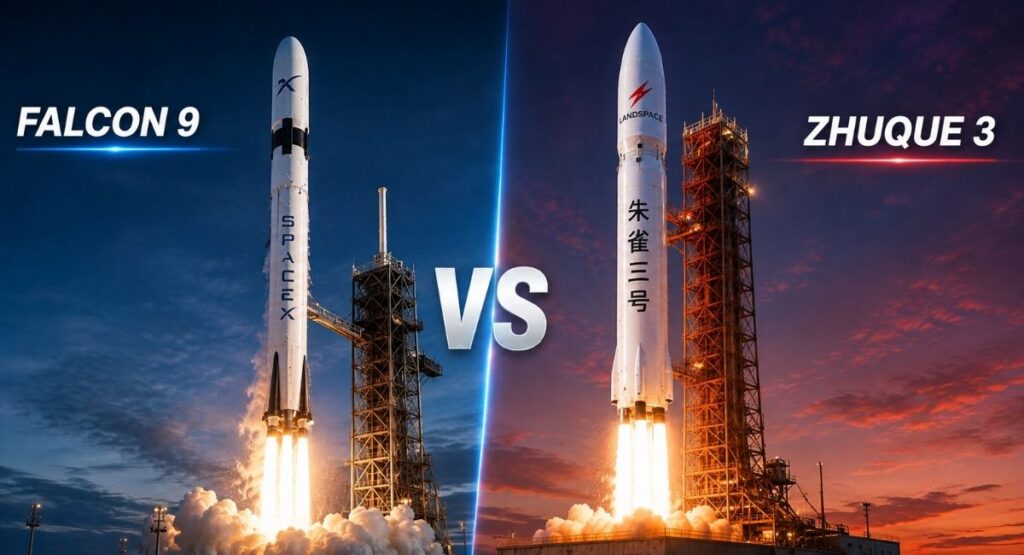
Falcon 9 has dominated all other reusable rockets for years. But the Zhuque 3 could overtake the Falcon 9 in the future by using methane and oxygen. The use of methane has accelerated the launch of reusable rockets by reducing failure risks. It speeds up the journey. It especially does not pollute the atmosphere. SpaceX is using RP-1 in Falcon 9.
Specific Material
SpaceX uses more complex and expensive materials in manufacturing reusable rockets, while LandSpace uses very cheap materials.
When expensive materials are used in the manufacture of reusable rockets, space travel will be more expensive for SpaceX than for LandSpace due to the high launch costs. A comparison of the two satellites is described below.
| Specifications | Falcon 9 (Block 5) | Zhuque 3 (ZQ-3E) |
| Developer | SpaceX (US) | LandSpace(China) |
| Landing Methods | Vertical Landing | Vertical Landing |
| Fuel Type | RP-1 + LOX | Methalox |
| First Flight | 2010 | 2025 |
| Diameter | 3.7 m | 4.5 m |
| Height | 70 m | 76.6 m |
| First Stage Engines | 9 × Merlin 1D | 9 × TQ-12B |
What Challenges do China’s Private Space Startups Face in Competing with SpaceX?
Chinese private space startups LandSpace, Galactic Energy, and Space Pioneer have made rapid progress in launching reusable rockets, but they face many challenges and difficulties in competing with SpaceX.
Mega-Constellation Bottlenecks
China’s planned low-Earth construction needs to deploy 10,000 satellites. The biggest obstacle to the development of Chinese startups is the lack of super-heavy rockets and high-capacity launches.
Reusability Gap
SpaceX operates on the one frequency and has launched the Falcon 9 booster 20 times. While LandSpace’s Zhuque 3 has made its first vertical landing, the challenge of relaunching remains.
Lack of an In-House Revenue Anchor
LandSpace’s biggest challenge is its reliance on funding from provincial and federal governments. While SpaceX’s own Starlink project is generating billions of dollars, it is the source of funding for SpaceX’s reusable rocket development.
Launch cost
Because SpaceX’s Falcon 9 launches frequently, the launch cost is $2,500 to $3,000 per kg. In contrast, LandSpace’s launch cost is $5,000 to $7,000 per kg. Its high cost is an obstacle to its development.
Beijing’s Commercial Space Policy for Space Development
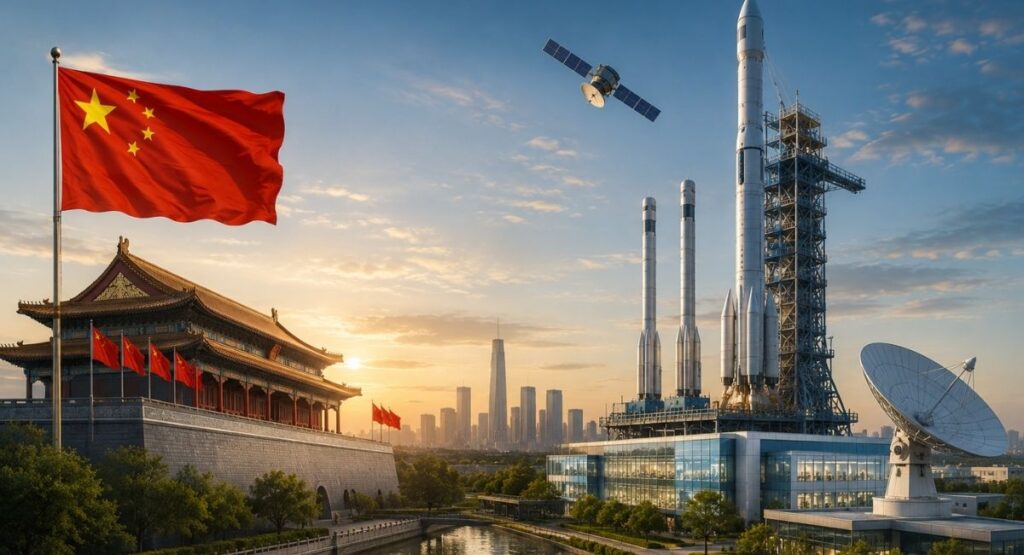
The Beijing Municipal Government is formulating key policies to advance China’s commercial space sector. These policies aim to provide manufacturing facilities and funding to Chinese private startups, such as LandSpace, Galactic Energy, and Space Pioneer. The main pillars of these policies are:
Local Government Capital and Funding
The Beijing government provides long-term, low-interest capital to private companies to grow.
This policy aims to provide long-term funding relief to companies developing methane-powered rockets and related technologies by reducing the risks of space exploration.
Civil-Military Fusion and State Test-Facility Access
Initially, only government agencies could use the national test stand and network to test rockets.
This policy of batching allowed private companies to use government engine test stands and tracking networks. This policy has substantially reduced the costs for private companies.
Conclusion
The US-China moon ice water war is no longer limited to the search for moon ice; it has now become part of private startups (Landspace and SpaceX). China wants to take the lead in space tech from SpaceX by using its advanced technology, extensive manufacturing supply chain, regional policies, and methane fuel. Chinese startups still face challenges such as super-heavy payloads, low capacity, and commercial funding, but LandSpace’s rapid transformation towards the Zhuque-3 suggests it will soon launch cheap, reusable rockets.
Comment on “How China’s Private Space Startups Are Challenging SpaceX’s Reusable Rockets”
Nice information