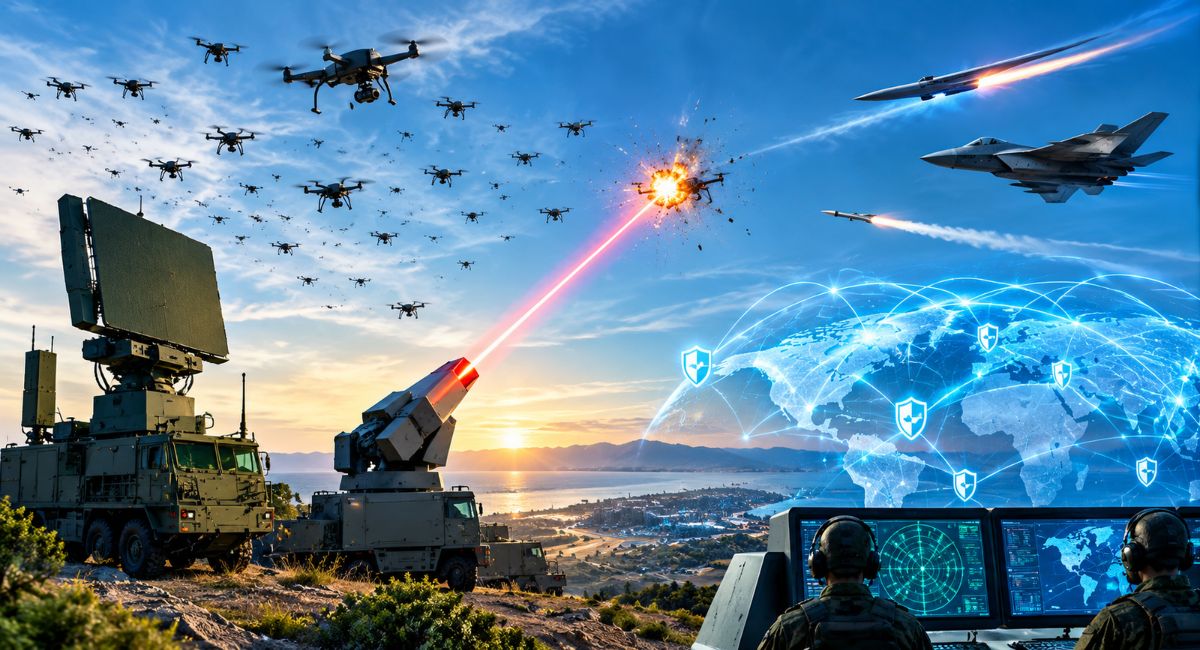
The way nations protect their skies has fundamentally transformed. For decades, traditional air defense relied heavily on giant radar installations and multimillion-dollar interceptor missiles. While these systems worked well against large jets and high-altitude missiles, today’s modern battlefield looks vastly different.
Skyward threats now include thousands of low-cost, highly agile attack drones, swarms of low-altitude unmanned aerial vehicles (UAVs), and hypersonic missiles. Shooting down a $2,000 drone with a $3 million missile is simply not sustainable.
To address these challenges, defense forces worldwide are deploying Next-Gen Air Defense Systems. These modern architectures rely on AI-powered drone slayers, directed-energy lasers, and interconnected global shield pacts to build a comprehensive defense strategy.
This article explains how these technologies work, why global partnerships matter, and how nations are keeping their skies secure.
The Evolving Sky: Why Traditional Air Defense Needs an Upgrade
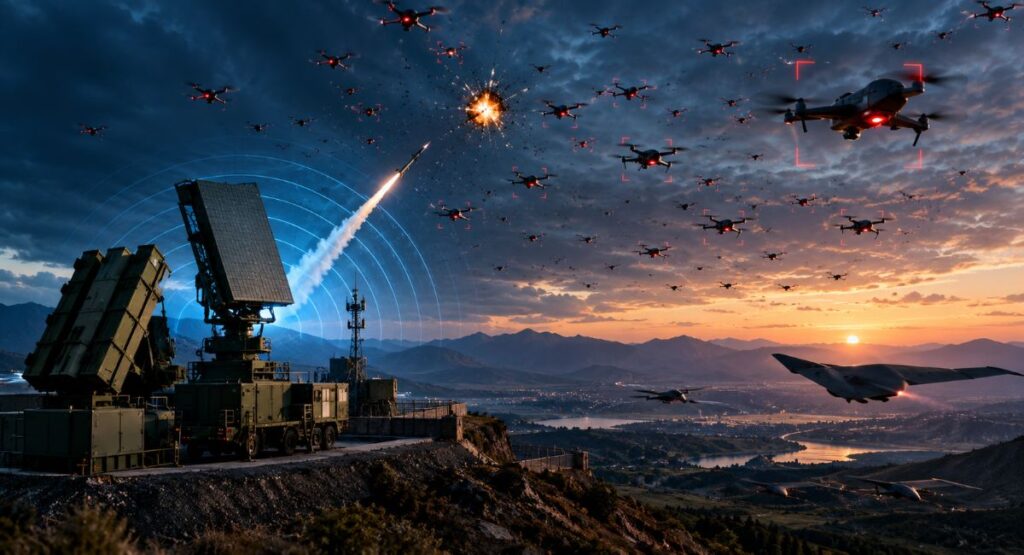
To understand why air defense is changing, it helps to take a look at the modern threats appearing in global skies.
1. The Drone Swarm Problem
In recent years, military strategy has shifted heavily toward unmanned aerial systems. Instead of launching one massive jet, an adversary can launch dozens or even hundreds of small, explosive-laden drones simultaneously. These swarms can overwhelm conventional radar networks and deplete missile supplies.
2. The Economic Imbalance
Traditional surface-to-air missile (SAM) systems are extremely expensive to manufacture and reload. When a defense network fires millions of dollars in munitions to stop cheap reconnaissance or kamikaze drones, it faces an unsustainable economic drain.
3. Dark Drones and Low-Altitude Threats
Modern UAVs often fly extremely low to the ground, using terrain features to hide from conventional long-range radar. Some operate without active radio transmissions, often called dark drones, making them significantly harder for manual human operators to track before it is too late.
Enter the AI Drone Slayers: Smart, Fast, and Autonomous
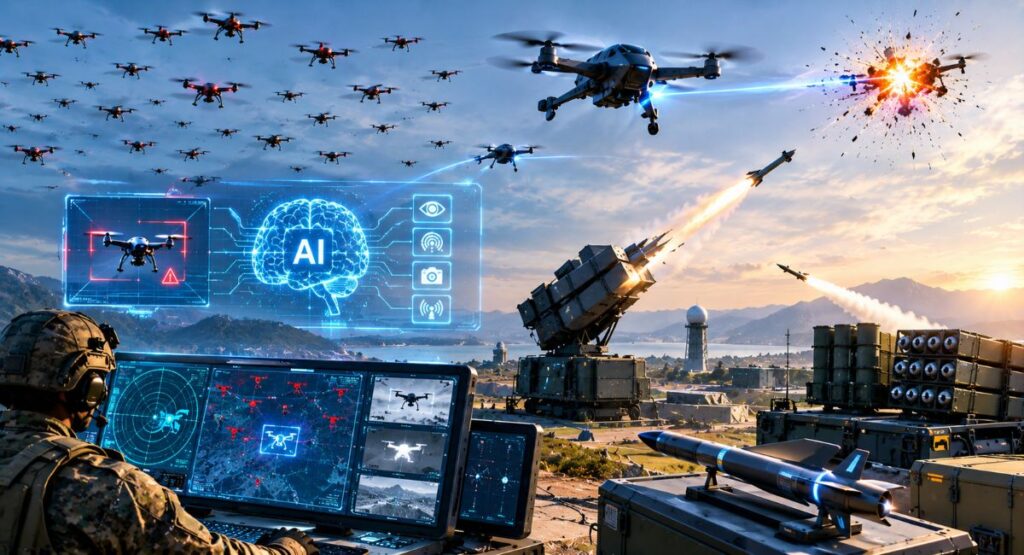
The first major pillar of next-gen defense is Artificial Intelligence (AI). AI acts as the central brain for counter-unmanned aerial systems (C-UAS), transforming how threats are detected, analyzed, and neutralized.
Automated Threat Detection and Tracking
Human visual monitoring of dozens of radar and video feeds can cause fatigue and slow reaction times. AI algorithms process streams of sensor data, including infrared imaging, optical cameras, and radio frequencies, in milliseconds.
These algorithms can isolate a low-flying drone against a cluttered terrain background, track its flight trajectory, and alert operators instantly.
Autonomous Interceptors and Counter-Drones
AI is used not only in ground software; it is also embedded directly in defense drones. Modern interceptor drones can launch into the air, navigate autonomously, communicate with peer drones, and physically neutralize incoming threats without requiring constant manual control.
Micro-Missiles and Smart Munitions
Alongside autonomous interceptors, compact micro-missiles designed specifically for counter-drone roles offer a cost-effective alternative to heavy traditional interceptors. These smaller munitions allow air defense batteries to pack dozens of ready-to-fire rounds into a single launcher, ensuring defense networks maintain high capacity against mass drone raids.
Directed-Energy & Lasers: The Cost-Effective Shield
While AI provides the intelligence, Directed-Energy Weapons (DEWs) supply a low-cost, high-precision capability.
| Defense Technology | Cost Per Shot | Key Advantage | Primary Target |
| Traditional Interceptor Missile | $500,000 to $3,000,000+ | Extreme long range & heavy payload | Fighter jets, large missiles |
| Micro-Interceptor Missile | $10,000 to $50,000 | Mobile, high capacity against raids | Attack drones, swarm UAVs |
| High-Energy Laser (DEW) | $1 to $10 per beam | Near-infinite magazine, speed of light | Small-to-medium drones, mortars |
How High-Energy Lasers Work
High-energy lasers focus intense beams of light onto a moving target. By concentrating intense thermal energy on a small surface area, the laser can melt a drone’s wing, burn through critical electronics, or detonate onboard fuel explosives within seconds.
Breaking the Cost Curve
Because high-energy lasers run on electric power generated by host vehicles or localized generators, each firing sequence costs only a few dollars in electricity. As long as power supply and cooling are maintained, the system effectively offers an unconstrained magazine capacity.
Hybrid Defense Architectures
Laser systems operate alongside kinetic weapons rather than replacing them entirely. Next-generation defense batteries combine high-energy lasers with physical micro-missiles into unified, hybrid platforms. The system automatically assigns lasers to burn down close-in drone threats while saving guided missiles for high-speed, long-range, or bad-weather targets.
Global Shield Pacts: International Cooperation in the Skies

No single country can monitor and defend its airspace completely isolated from its neighbors. This has driven the rapid rise of Global Shield Pacts, multinational alliances that share data, coordinate radar networks, and standardize air defense technology.
Shared Radar and Data Feeds
Through multinational defense agreements, allied countries connect their radar networks, satellite monitoring arrays, and ground sensors into unified command structures. If an unidentified threat launches thousands of miles away, integrated shield networks instantly broadcast tracking data across allied command centers.
Joint Interoperability and Testing
Through collaborative experimental exercises and defense initiatives, military forces test counter-UAS platforms, software protocols, and laser systems together. This guarantees that systems manufactured in different countries can communicate seamlessly during active defense operations.
Shared Procurement Costs
Developing advanced AI models and high-energy directed weapons requires substantial financial investment. Global shield pacts allow partner nations to pool research budgets, streamline manufacturing, and lower unit costs across allied military fleets.
Key Challenges Facing Next-Gen Air Defense
Despite rapid technological progress, modern air defense systems face several key technical and operational hurdles:
- Weather Limitations for Directed Energy
Heavy fog, dust storms, and torrential rain can scatter laser light beams, reducing their effective range and power.
- Cybersecurity and Jamming Risks
Highly digitized, AI-driven defense networks must maintain strong resistance to hostile cyberattacks, GPS spoofing, and electronic warfare jamming.
- Collateral Damage and Airspace Management
Automated interceptor networks operating near urban areas must accurately distinguish between hostile combat drones, commercial transport flights, and civilian drones to prevent unintended damage.
- Human-in-the-Loop Ethics
Ensuring human commanders maintain final authority over lethal engagement decisions remains a key priority as artificial intelligence speeds up automated combat systems.
The Future: What Lies Ahead for Sky Security?
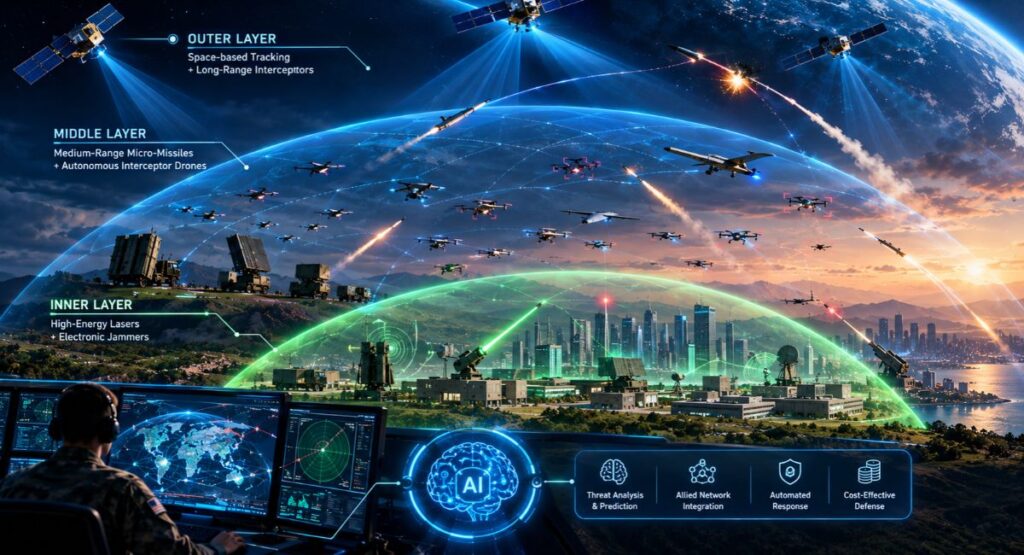
Looking forward, air defense will rely heavily on fully integrated, layered protection networks.
Future air defense relies on a multi-layered architecture working in synchronization:
- Outer Layer: Space-based satellite tracking paired with long-range interceptor missiles to engage high-speed aerial threats at extended distances.
- Middle Layer: Highly mobile, medium-range micro-missiles and autonomous interceptor drones deployed to engage swarms.
- Inner Layer: Point-defense high-energy lasers and electronic jammer arrays positioned to shield critical infrastructure, cities, and military bases from close-range targets.
By combining AI decision-making tools, cost-effective laser interceptors, and international coalition pacts, modern defense networks are adapting to keep global skies secure.
Conclusion
The transformation of global air defense reflects a shifting security environment. As aerial threats grow smaller, cheaper, and faster, defense networks must adapt by becoming smarter, more agile, and more cost-effective.
By combining AI-driven threat detection, high-energy laser weapons, and multinational shield pacts, modern defense architectures provide scalable protection for global infrastructure. Understanding these foundational technologies offers valuable insight into how nations protect their sovereignty, maintain strategic stability, and secure the skies.