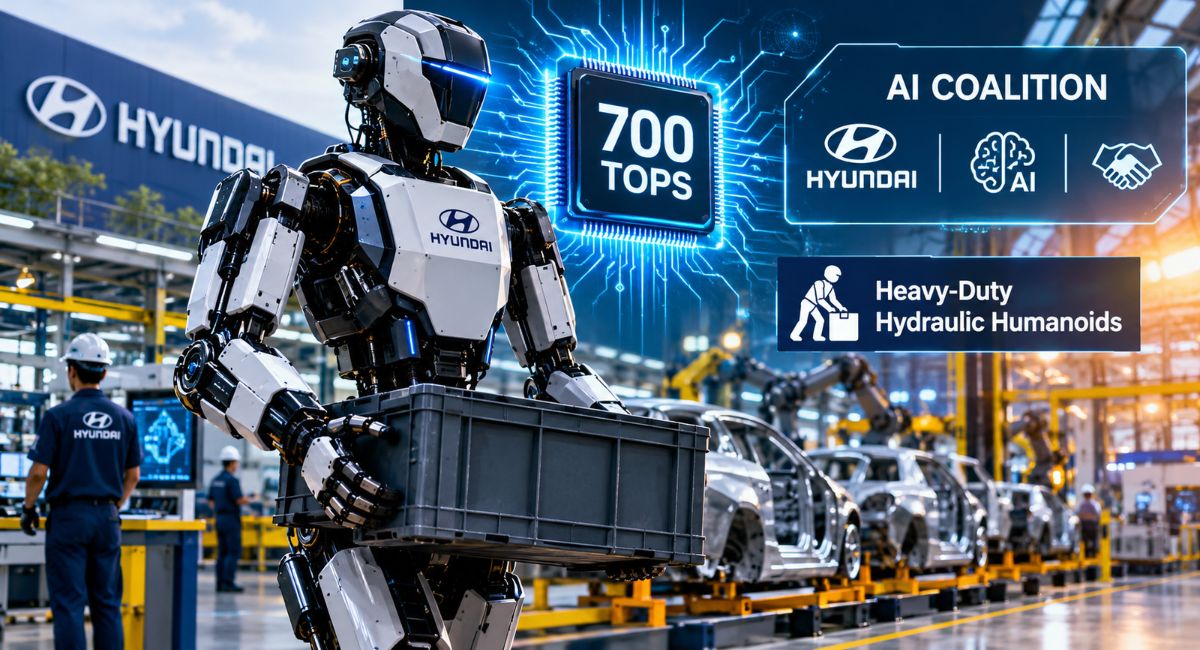
Have you ever wondered what factories will look like ten or twenty years from now? For decades, sci-fi movies promised us a future filled with walking, talking, and thinking robots working alongside human beings. Today, that future is no longer just a movie plot; it is actively taking shape on factory floors around the world.
We are entering a transformative technological milestone known as the 700-TOPS Era. Driven by powerful AI partnerships and automotive giants like Hyundai, heavy-duty humanoid robots are moving out of research labs and straight into industrial workplaces.
If words like TOPS, AI coalition, or hydraulic humanoids sound complex, don’t worry! This article breaks down these groundbreaking concepts in clear, easy-to-understand terms. By the time you finish reading, you will understand how smart computing and heavy-lifting robotics are teaming up to build the future of manufacturing.
What Does 700-TOPS Mean and Why Is It Important?
To understand this new era of technology, we first need to look at how a robot thinks. Just like humans rely on brainpower to react to their environment, a robot relies on its central processing unit.
Decoding TOPS
In the tech world, TOPS stands for Trillions of Operations Per Second. It is a metric used to measure the processing performance of modern Artificial Intelligence hardware, specifically Neural Processing Units (NPUs).
- 1 TOPS: The computer can process 1,000,000,000,000 (one trillion) tasks or calculations in a single second.
- 700 TOPS: A mind-boggling 700 trillion calculations every second!
Why High Compute Matters for Robots
Older factory robots followed strict, pre-written code. If a box was placed two inches to the left, a traditional robot would miss it entirely because it could not see or adapt on its own.
With 700 TOPS of processing power, a humanoid robot gains real-time sight, spatial intelligence, and instant decision-making abilities. It can analyze dynamic surroundings using camera sensors, detect obstacles, adjust its grip, and safely navigate around human coworkers all in a fraction of a millisecond.
| Robot Era | Processing Capacity | Core Capability | Example Task |
| Legacy Industrial Robots | Basic Gigahertz Processing | Fixed, repetitive routines | Welding car panels in place |
| Early Smart Automation | 10–50 TOPS | Basic visual tracking & object sorting | Sorting packages on a conveyor |
| The 700-TOPS Humanoid Era | 700+ TOPS | Real-time AI perception, reasoning, and rapid physical reaction | Lifting dynamic loads while dodging unpredictable obstacles |
Understanding Hyundai’s Strategic AI Coalition
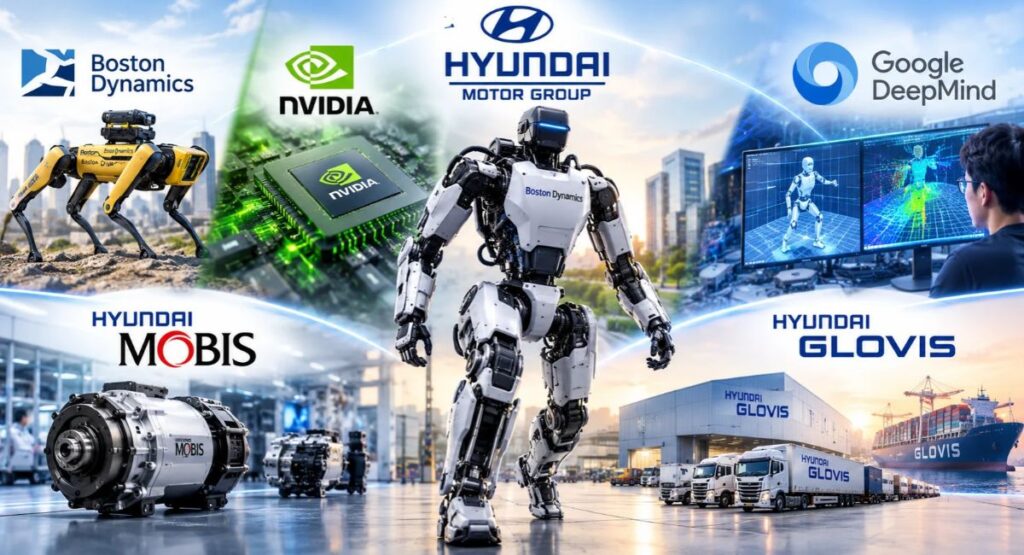
Creating an intelligent, heavy-duty robot requires world-class hardware, hyper-efficient mechanical parts, and advanced software. Realizing that no single company can excel at every discipline alone, Hyundai established a strategic AI Coalition to join forces across tech sectors.
The Key Players in the Ecosystem
Hyundai Motor Group has built a connected value network around robotics and AI:
- Boston Dynamics
Acquired by Hyundai, Boston Dynamics brings decades of expertise in dynamic balance, bipedal movement, and humanoid design (such as the world-famous Atlas robot).
- NVIDIA
Provides advanced system architecture, industrial simulation platforms (like NVIDIA Omniverse), and AI chips capable of supporting high-TOPS workloads.
- Google DeepMind
Partners with Boston Dynamics to build large-scale foundation models for robotics, helping machines interpret human instructions and complex physical environments.
- Hyundai Group Affiliates:
- Hyundai Mobis: Specialized in developing high-torque actuators and standardized mechanical components.
- Hyundai Glovis: Optimizes global supply chains and logistics systems so robots can be deployed at scale.
By combining physical robotics, high-performance hardware, and cutting-edge software intelligence, Hyundai’s ecosystem forms a complete end-to-end framework for industrial AI.
The Shift to Heavy-Duty Hydraulic and High-Torque Humanoids
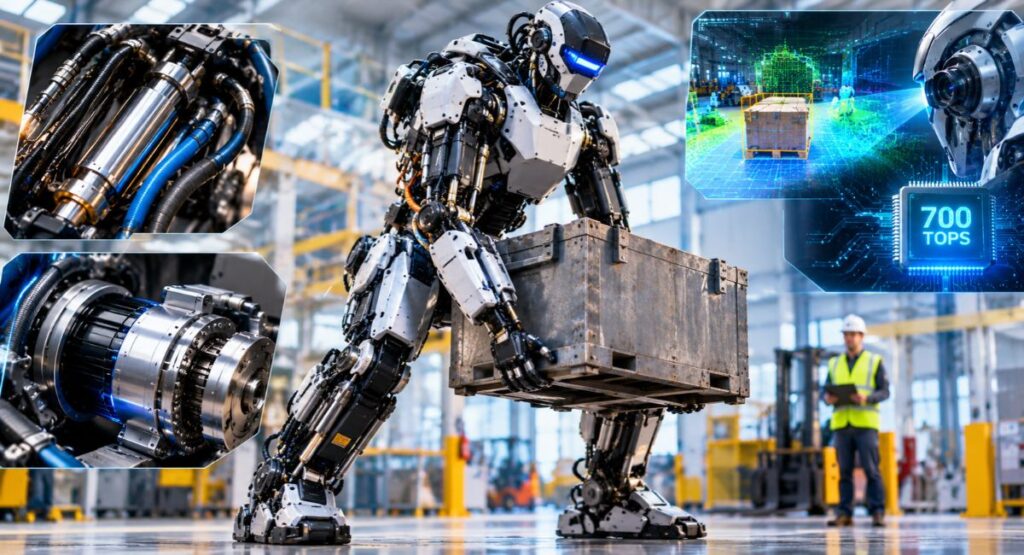
When most people think of modern gadgets like smartphones or drones, they picture small electric motors and tiny batteries. However, moving heavy automotive equipment requires far more power.
Electric vs. Hydraulic Actuation in Heavy Robotics
To build a humanoid capable of handling real industrial loads, engineers rely on advanced actuation systems:
- Hydraulic Systems
Use pressurized fluid to deliver extreme force in compact frames. Hydraulic humanoids can effortlessly carry heavy loads, absorb hard impacts, and operate smoothly in tough environments.
- High-Torque Electric Actuators
Newer all-electric humanoids use custom high-torque motors paired with rotational joints. They offer quiet, precise movement with low maintenance demands.
By combining 700-TOPS AI computing with robust mechanical designs, heavy-duty humanoids can lift payload weights to 50 kg (110 lbs) while maintaining human-like balance and precision.
Heavy Physical Power (Hydraulic/High-Torque Actuators).
Ultra-Fast Visual Perception (700-TOPS AI Brain).
A safe, agile humanoid built for heavy industrial work.
How 700-TOPS Computing Transforms Heavy-Duty Humanoids
Adding 700-TOPS compute capabilities to a heavy-duty humanoid turns a brute-force machine into an intelligent, adaptive partner.R
1. Vision and Spatial Perception
With 700-TOPS hardware, robots can stream high-definition 360-degree video, process depth-sensing camera inputs, and create a 3D visual map of their workspace in real time. They can instantly recognize tools, parts, safety hazards, and human team members.
2. Predictive Balance and Movement Adjustments
Walking on two legs is surprisingly difficult. If a heavy-duty robot stumbles or picks up an unevenly weighted box, the AI brain must recalculate motor torques hundreds of times per second to keep the machine balanced. High TOPS throughput ensures these rapid balance micro-adjustments happen seamlessly without delay.
3. Tactile Feedback and Force Control
When a heavy-duty robot lifts an engine component, it must apply enough pressure to hold the part firmly without crushing delicate wires or sensors. Real-time AI processing processes data from tactile sensors in the hands to adjust grip strength on the fly.
What Is Robotics-as-a-Service (RaaS)?
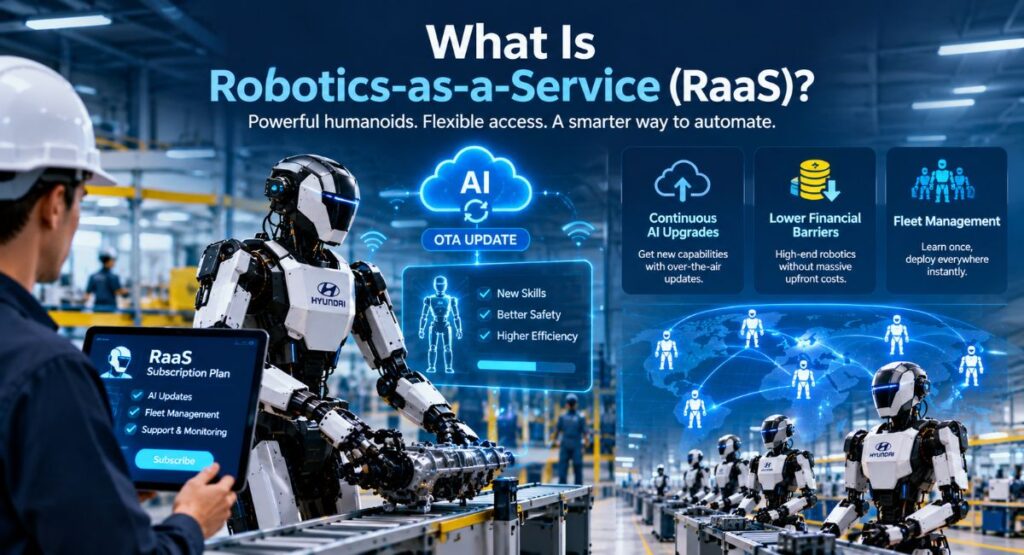
In the past, buying industrial machinery required millions of dollars in upfront capital. The 700-TOPS era is changing that commercial model through Robotics-as-a-Service (RaaS).
Under a RaaS model, companies subscribe to humanoid services rather than purchasing hardware outright:
- Continuous AI Upgrades
Just as your smartphone receives software updates over Wi-Fi, RaaS humanoids receive over-the-air AI model updates that instantly grant them new capabilities.
- Lower Financial Barriers
Small and medium-sized factories can adopt high-end humanoid robotics without massive upfront capital investments.
- Fleet Management
When one humanoid learns a new skill or safety optimization on the assembly line, that knowledge can be deployed instantly to every robot in the global fleet.
Overcoming Challenges in High-Compute Humanoid Robotics
While the promise of the 700-TOPS era is exciting, bringing heavy-duty humanoids to market comes with technical and practical engineering hurdles.
1. Thermal and Power Management
Running a 700-TOPS processing unit alongside heavy-duty actuators consumes a lot of electrical power. Engineers must develop lightweight cooling systems and efficient battery configurations to maintain high computing output without draining power reserves too quickly.
2. Human-Robot Safety
A robot that weighs nearly 200 pounds and lifts 100-pound loads must meet strict safety standards. Multi-layered safety protocols, fail-safe hydraulic valves, and redundant vision systems ensure that if a system glitch occurs, the robot stops safely without endangering nearby workers.
3. High Manufacturing Costs
Building multi-jointed humanoids equipped with advanced sensors, heavy-duty actuators, and powerful AI chips remains expensive. However, global investments and mass production strategies will gradually bring costs down over time.
The Future: What Lies Ahead Beyond 700 TOPS?
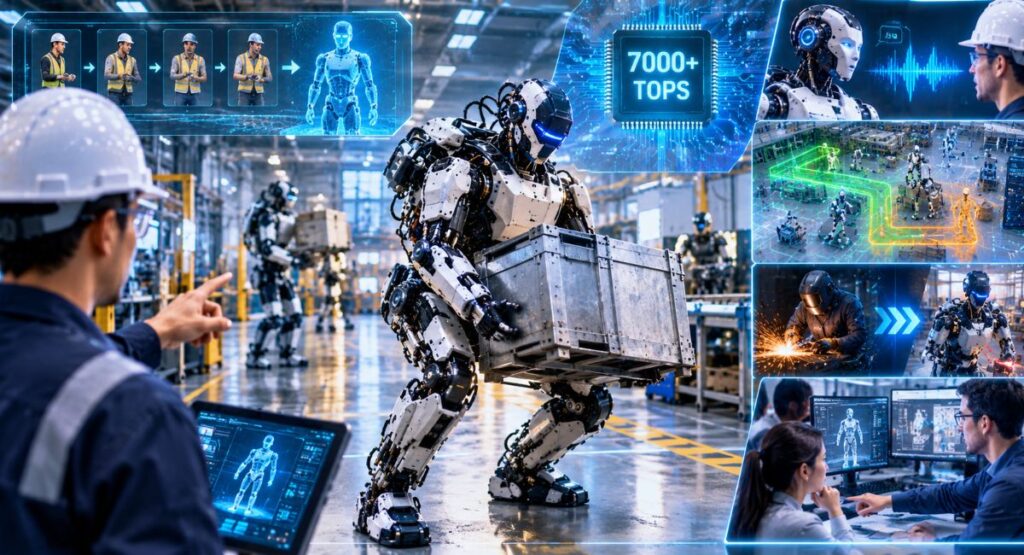
The convergence of 700-TOPS compute engines, strategic industrial coalitions, and heavy-duty humanoids is only the beginning.
As computing power scales into thousands of TOPS, humanoids will gain even deeper reasoning skills. We will see robots that can learn new tasks simply by observing a human colleague perform them once, translate natural speech into multi-step physical routines, and dynamically reorganize factory floors on their own.
Rather than replacing human workers, these heavy-duty machines are designed to take on dangerous, repetitive, and physically punishing tasks, freeing human experts to focus on quality assurance, strategic design, and creative problem-solving.
Conclusion
The emergence of the 700-TOPS Era marks a monumental milestone in technological history. By pairing massive artificial intelligence processing power with the raw strength of heavy-duty hydraulic and high-torque humanoids, Hyundai and its AI coalition are reshaping the boundaries of modern industry.
From flexible assembly lines to safer factory floors, smart heavy-duty humanoids are paving the way toward a safer, more efficient, and highly collaborative future.