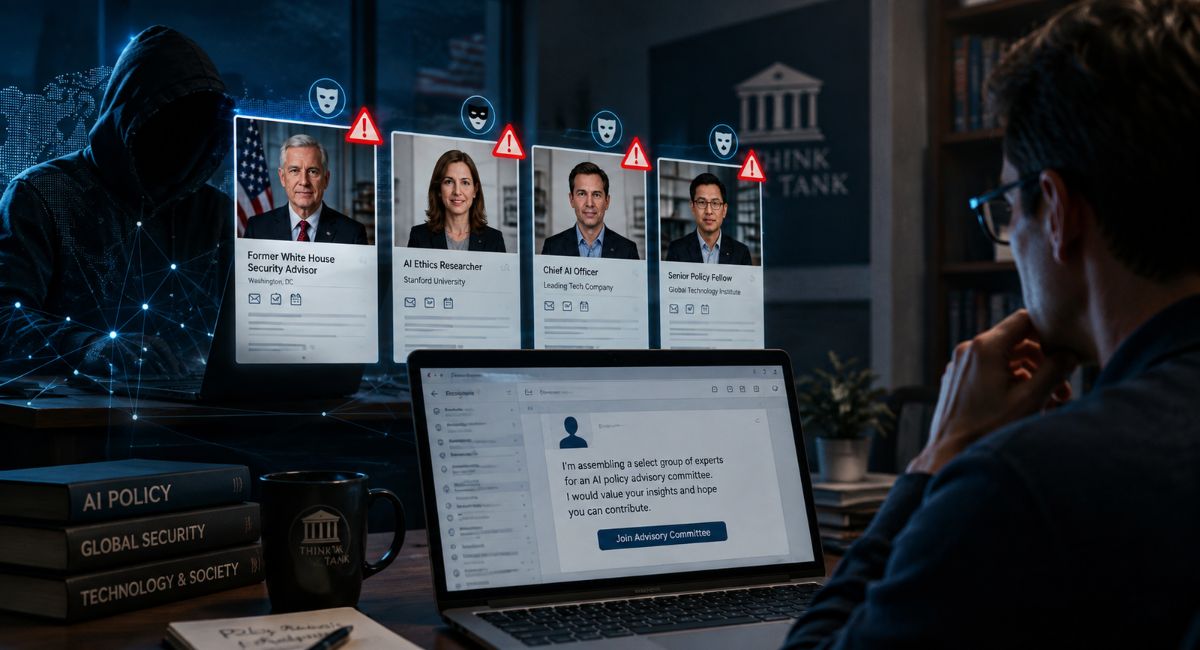
Have you ever received an email from someone famous, respected, or powerful, asking for your opinion? Imagine getting an email from a former White House official or a top artificial intelligence executive inviting you to join an elite advisory committee. You would probably feel honored and eager to reply. Unfortunately, cybercriminals know this human tendency all too well.
Cybersecurity researchers uncovered a sophisticated campaign carried out by a nation-state hacking group tracked as TA419. Instead of using obvious spam or malicious attachments, TA419 created believable online personas impersonating leading AI researchers, government leaders, and technology experts. Their primary targets? Policy researchers and experts at top United States think tanks, law firms, and academic institutions.
This article explains who TA419 is, how their clever fake-profile trick worked, why they targeted think tanks, and what simple steps you can take to protect your digital identity.
Who is TA419?
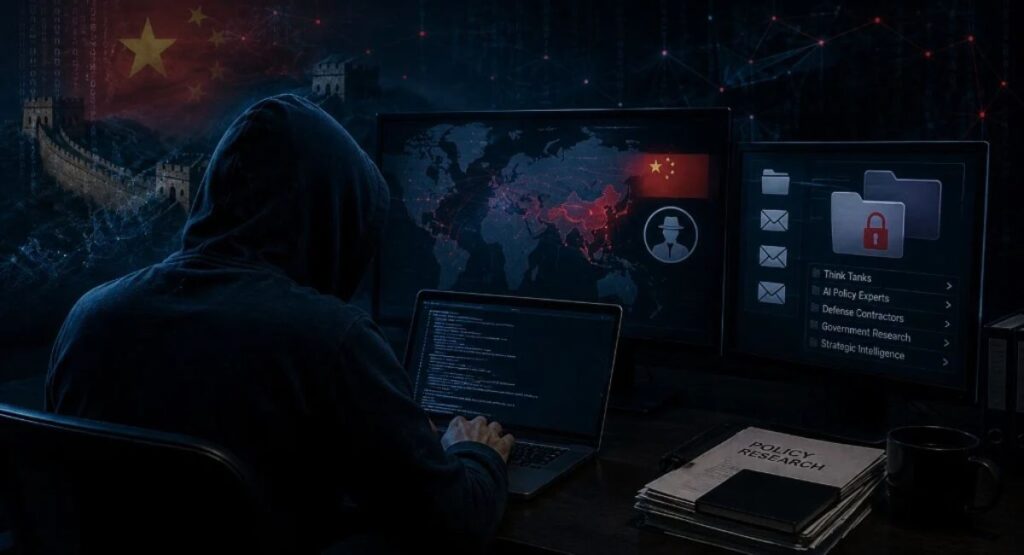
Before diving into the mechanics of the attack, it helps to know who was behind it. TA419 is a cyber-espionage threat group aligned with Chinese state interests. Unlike financial hackers who steal credit cards or demand ransom payments, espionage groups like TA419 focus on information gathering. Their goal is to secretly spy on organizations, read sensitive emails, and steal policy insights to give their sponsor nation a strategic advantage.
Historically, TA419 focused on defense contractors, energy companies, and foreign policy groups. However, as Artificial Intelligence (AI) became central to global technology and national security discussions, TA419 expanded its focus to AI policy experts.
Why Target U.S. Think Tanks?

Why Target U.S. Think Tanks? You might wonder why a high-level espionage group would target think tank researchers instead of hacking directly into military bases or government servers.
The answer lies in how policy is formed in the digital age:
- Think tanks draft trade strategies, AI regulation proposals, export control ideas, and national security frameworks before they become law. Accessing a think tank researcher’s email gives hackers a sneak peek into future government regulations.
- Government agencies generally have strict, multi-layered security protocols. Think tanks, universities, and research institutes often operate with more open networks to encourage collaboration, making them easier targets.
- Think tank scholars regularly communicate with lawmakers, corporate executives, and military strategists. Compromising just one researcher’s account allows hackers to send legitimate-looking phishing emails to higher-value targets.
The Phishing Playbook: How the Fake AI Personas Worked
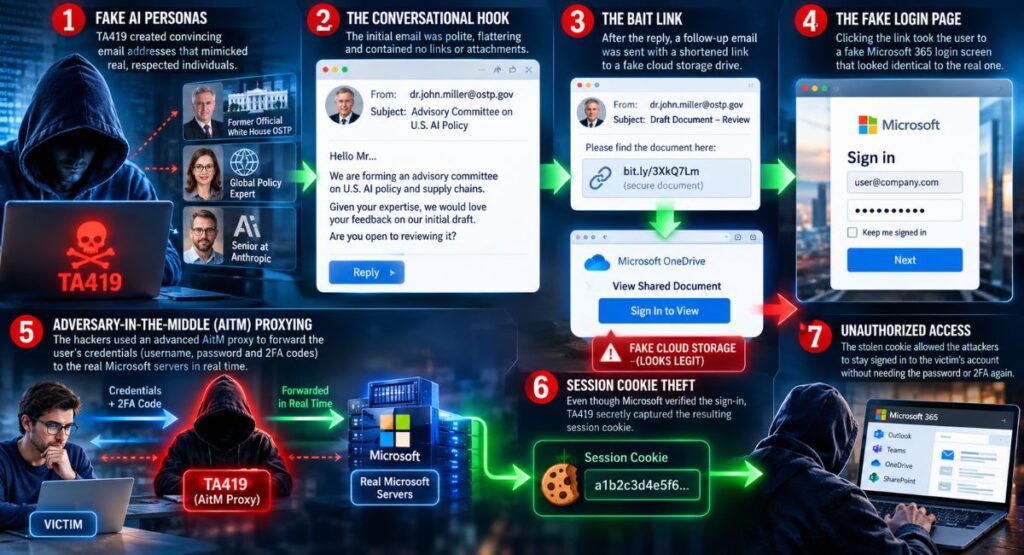
The TA419 campaign succeeded because it exploited trust and professional pride rather than relying solely on technical exploits. Security experts observed two distinct tactics in this attack sequence.
Phase 1: High-Profile Impersonation
TA419 set up email addresses designed to mimic real, highly respected individuals in the public policy and technology spaces. For example:
- Government Leaders: Posing as former officials from the White House Office of Science and Technology Policy.
- Leading Economists: Posing as renowned global policy experts and foreign trade analysts.
- AI Industry Insiders: Posing as senior employees from prominent AI companies (such as Anthropic) with subject lines inviting feedback on AI military integration.
Phase 2: The Conversational Hook
Standard spam emails usually contain suspicious links or file attachments right away. Security software quickly flags those files.
TA419 did something much smarter. Their initial email contained no links, no attachments, and no malicious code. It was simply a polite, flattering invitation:
Hello [Mr…], we are forming an advisory committee on U.S. AI policy and supply chains. Given your expertise, we would love your feedback on our initial draft. Are you open to reviewing it?
Because the email looked legitimate, came from a famous name, and praised the recipient’s work, many targets replied enthusiastically.
Phase 3: The Adversary-in-the-Middle (AITM) Trap
Once a target replied, TA419 sent a follow-up email containing a shortened link to view the secure document hosted on a fake cloud storage drive (like a fake Microsoft OneDrive folder).
When the user clicked the link, they were taken to a fake login window that looked identical to the official Microsoft 365 login screen.
Using an advanced technique called Adversary-in-the-Middle (AITM) proxying, the hackers forwarded the user’s username, password, and even their two-factor authentication (2FA) codes directly to the real Microsoft servers in real time. Microsoft verified the sign-in and granted access. However, because TA419 sat in the middle, they secretly captured the resulting session cookie.
This cookie allowed the attackers to stay signed in to the victim’s account without needing their password or security code again.
What Is Adversary-in-the-Middle (AITM) Phishing?
To understand why this attack was so dangerous, it helps to understand standard security versus AitM attacks.
In a traditional phishing attack, standard Two-Factor Authentication (like a text message code) protects your account. But in an AITM attack, the hacker’s server acts as a middleman. You think you are logging into Microsoft, but you are actually passing your credentials through the hacker’s system. When you enter your 2FA code, the hacker forwards it instantly to Microsoft, logs you in, and steals the master session key.
Red Flags You Can Spot in Fake-Expert Emails
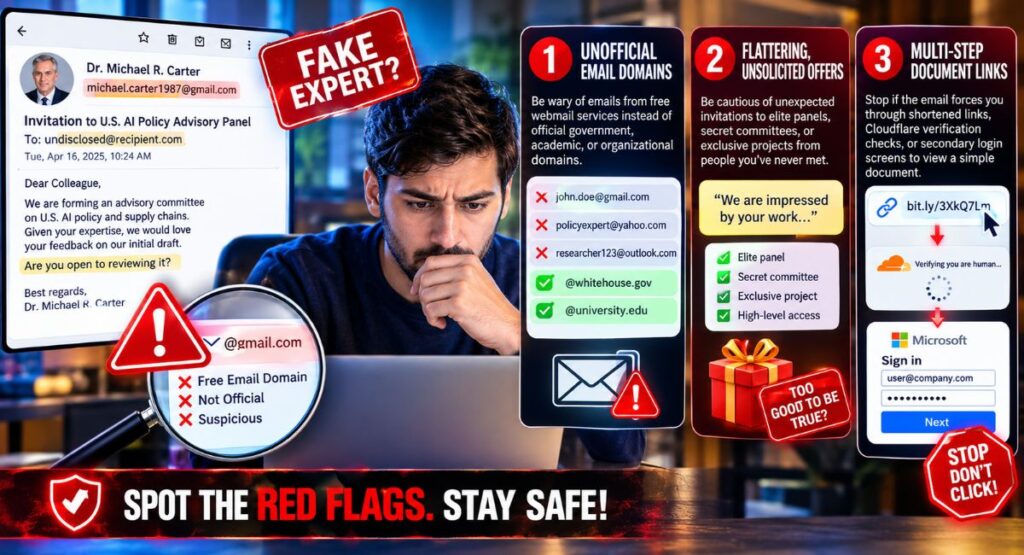
Even though TA419’s campaign was highly sophisticated, there were clear clues that revealed the emails were fraudulent. Learning these red flags can keep you safe from similar social engineering attacks:
Unofficial Email Domains
The hackers sent invitations from free, public email accounts instead of official government, academic, or organizational domains. A White House director or university dean will seldom conduct official business from a free webmail address.
Flattering, Unsolicited Offers
Be cautious when receiving unexpected invitations to elite panels, secret committees, or exclusive projects from people you have never met personally.
Multi-Step Document Links
If an email forces you through shortened web links (like Bitly), Cloudflare verification checks, or secondary login screens just to view a standard document, stop immediately.
How Organizations and Individuals Can Stay Protected
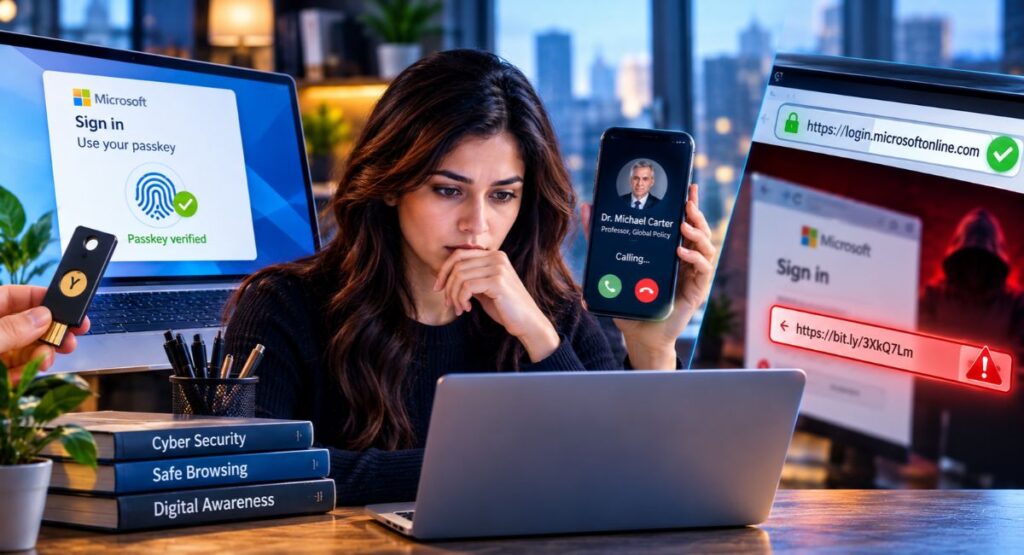
Protecting yourself and your organization against advanced impersonation attacks requires combining smart digital habits with modern security tools.
1. Upgrade to Phishing-Resistant Authentication (Passkeys)
Standard 2FA codes sent via SMS or authentication apps can be bypassed using AITM techniques. Switch to phishing-resistant authentication, such as hardware security keys (e.g., YubiKeys) or device-bound Passkeys. These tools verify the real web domain in the background, refusing to send sign-in tokens to a fake attacker page.
2. Practice Out-of-Band Verification
If you receive an unexpected email from an expert, government official, or colleague, do not click reply. Instead, reach out through an independent, trusted channel such as looking up their profile on their official employer website or calling a known phone number to verify the request.
3. Inspect Links Before Signing In
Never enter your password on a page that opens unexpectedly from a file-sharing link. Always check the web browser address bar. If you are supposed to be logging into Microsoft, ensure the domain name in your browser bar is strictly login.microsoftonline.com or microsoft.com.
Key Takeaways
- TA419 is a state-aligned cyber-espionage group targeting U.S. policy experts, think tanks, and research labs.
- Hackers used fake profiles impersonating White House leaders and AI executives to build trust before sending phishing links.
- The attack relied on Adversary-in-the-Middle (AitM) tools that bypass standard 2FA by stealing session cookies.
- Inspecting sender domains, using hardware passkeys, and verifying messages through alternative channels remain your best lines of defense.
Conclusion
The TA419 phishing campaign shows that cybersecurity is no longer just about protecting password databases or stopping computer viruses. Modern cybercriminals focus heavily on human psychology, using real names, legitimate-sounding projects, and flattery to trick even top experts into dropping their guard.
As artificial intelligence continues to shape our technological future, staying informed about how threat actors operate is your best defense. By adopting phishing-resistant passkeys and verifying unexpected outreach, you can keep your digital identity and sensitive research completely safe.